

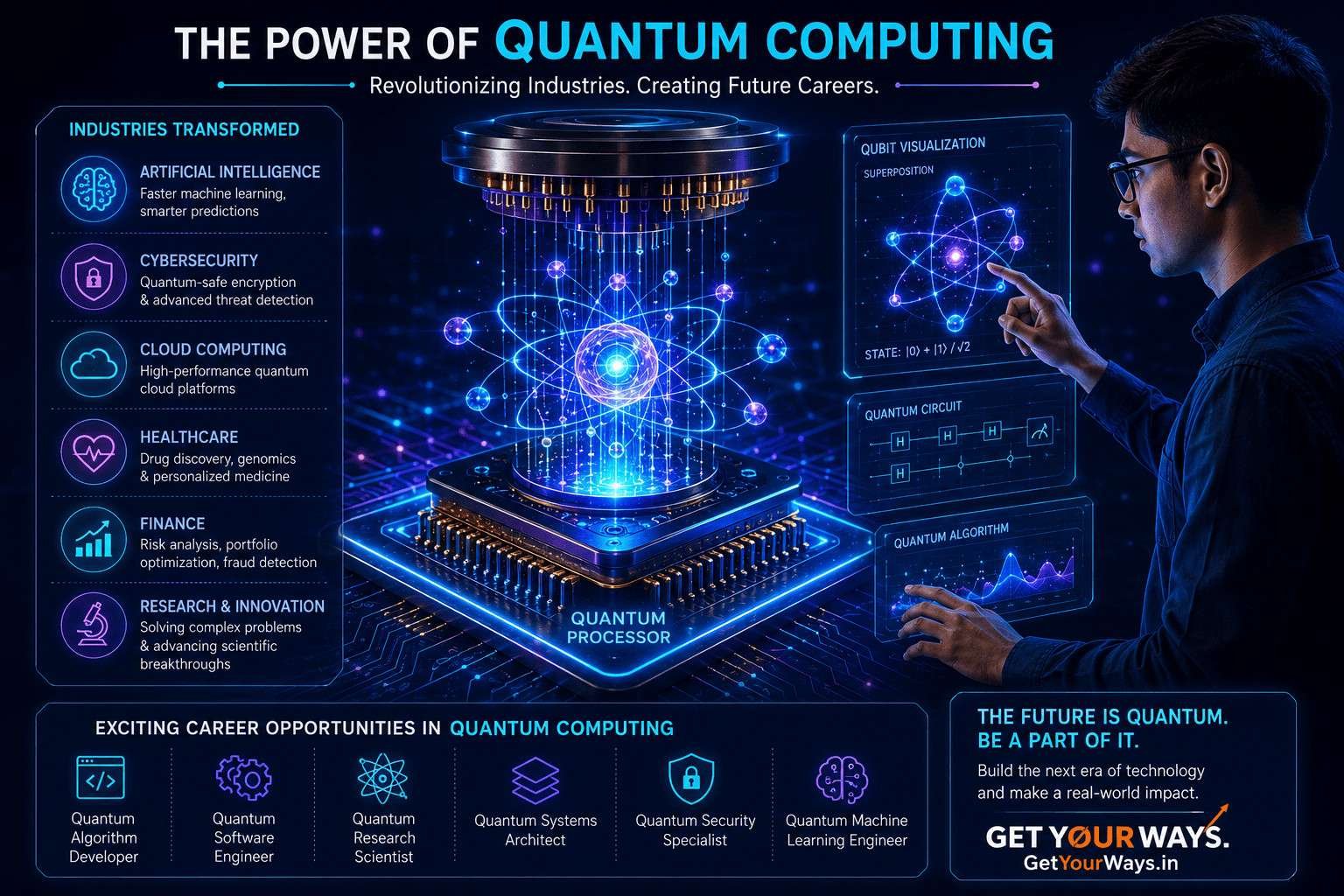
Quantum Computing Careers: A Guide for Future Tech Experts
Technology continues to evolve at an incredible pace, creating exciting career opportunities that were unimaginable just a decade ago. Among the most promising fields is Quantum Computing, a revolutionary technology that has the potential to transform industries such as healthcare, cybersecurity, finance, manufacturing, artificial intelligence, logistics, and scientific research.
As organizations invest billions of dollars into quantum technologies, the demand for skilled professionals is steadily increasing. Governments, technology companies, research institutions, and startups are actively searching for experts capable of building quantum algorithms, designing quantum hardware, and developing next-generation applications.
For students, fresh graduates, IT professionals, and researchers, this emerging field offers a chance to build a future-proof career with significant growth potential.
In this guide, you’ll learn:
- What quantum computing is
- Why it matters
- Career opportunities
- Required skills
- Educational pathways
- Salary expectations
- Future job trends
- How to prepare for a successful career in quantum computing
What is Quantum Computing?
Quantum computing is a new approach to computation that uses the principles of quantum mechanics instead of traditional binary computing.
Traditional computers process information using bits, which can only have two values:
- 0
- 1
Quantum computers use qubits, which can exist in multiple states simultaneously through a phenomenon known as superposition.
Another important principle is entanglement, allowing qubits to interact in ways that enable extremely powerful computational capabilities.
These unique characteristics allow quantum computers to solve certain complex problems much faster than today’s most powerful supercomputers.
Although quantum computers are not expected to replace classical computers entirely, they are expected to work alongside them for highly specialized applications.
Why is Quantum Computing Important?
Many real-world problems involve billions of possible combinations, making them difficult for traditional computers.
Quantum computing can significantly improve problem-solving in areas such as:
- Drug discovery
- Climate modeling
- Financial risk analysis
- Supply chain optimization
- Artificial Intelligence
- Cybersecurity
- Space exploration
- Material science
Because of these capabilities, governments and private companies worldwide are making substantial investments in quantum research and development.
Why Are Quantum Computing Careers Growing?
The global technology industry is entering a new era where quantum computing is becoming a strategic priority.
Several factors are driving career growth:
1. Massive Industry Investment
Technology giants and startups continue investing heavily in quantum research.
Major investment areas include:
- Quantum hardware
- Quantum software
- Quantum networking
- Quantum security
- Cloud-based quantum computing
These investments create demand for skilled professionals across engineering, software development, physics, mathematics, and research.
2. Government Initiatives
Many countries have launched national quantum technology missions to accelerate innovation.
Governments recognize quantum computing as a critical technology for:
- National security
- Scientific advancement
- Economic competitiveness
- Digital transformation
As public funding increases, universities and research organizations are expanding quantum-related education and employment opportunities.
3. Industry Adoption
Quantum computing is no longer limited to laboratories.
Industries actively exploring quantum applications include:
- Banking
- Healthcare
- Pharmaceuticals
- Manufacturing
- Logistics
- Telecommunications
- Aerospace
- Automotive
- Energy
As businesses experiment with practical quantum solutions, demand for specialized professionals continues to grow.
Industries Hiring Quantum Computing Professionals
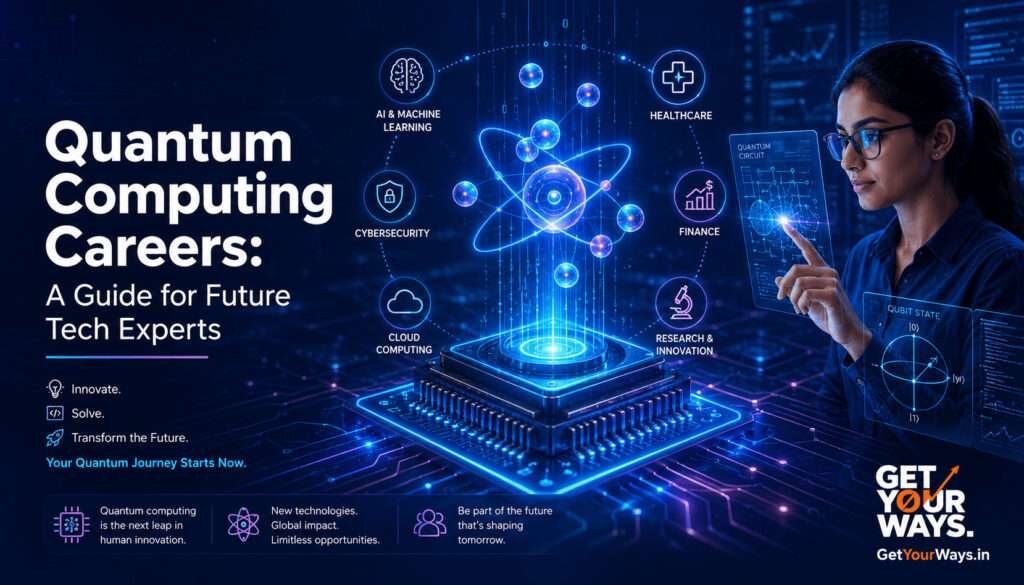
Quantum computing professionals can find opportunities across multiple sectors.
Information Technology
Technology companies develop quantum software platforms, programming frameworks, and cloud-based quantum services.
Common roles include:
- Quantum Software Developer
- Quantum Cloud Engineer
- Quantum Application Developer
Healthcare and Pharmaceuticals
Quantum computing has the potential to accelerate:
- Drug discovery
- Protein folding simulations
- Medical research
- Personalized medicine
Healthcare organizations increasingly collaborate with quantum researchers to improve computational efficiency.
Banking and Finance
Financial institutions use quantum computing research to improve:
- Portfolio optimization
- Fraud detection
- Risk assessment
- Algorithmic trading
- Market forecasting
These applications require professionals with expertise in mathematics, finance, and quantum algorithms.
Cybersecurity
As quantum computers become more powerful, existing encryption methods may become vulnerable.
Organizations therefore seek experts in:
- Post-quantum cryptography
- Secure communication
- Quantum encryption
- Network security
Cybersecurity is expected to become one of the largest employment sectors within quantum technology.
Aerospace and Defense
Quantum computing assists with:
- Navigation systems
- Satellite communication
- Defense simulations
- Logistics optimization
Government agencies and aerospace companies continue investing heavily in quantum technologies.
Artificial Intelligence
Quantum computing has the potential to improve machine learning by processing highly complex datasets more efficiently.
Researchers are exploring:
- Quantum neural networks
- Quantum optimization
- Hybrid AI systems
This creates exciting opportunities for professionals with expertise in both AI and quantum computing.
Top Quantum Computing Career Options
One of the biggest advantages of this field is the variety of career paths available.
1. Quantum Software Developer
Quantum software developers create applications that run on quantum computers.
Responsibilities
- Designing quantum algorithms
- Writing quantum programs
- Testing quantum applications
- Improving computational performance
- Collaborating with research teams
Required Skills
- Python
- Linear Algebra
- Quantum Algorithms
- Problem Solving
- Qiskit
- Software Development
2. Quantum Research Scientist
Research scientists work on advancing quantum technologies through academic and industrial research.
Typical responsibilities include:
- Publishing research papers
- Conducting experiments
- Developing new quantum algorithms
- Collaborating with universities
- Exploring practical applications
This role generally requires advanced education such as a master’s degree or Ph.D. in fields like physics, computer science, mathematics, or engineering.
3. Quantum Hardware Engineer
Quantum hardware engineers design and improve the physical systems that power quantum computers.
Their work involves:
- Developing quantum processors
- Building qubit architectures
- Improving hardware stability
- Testing quantum devices
- Collaborating with multidisciplinary engineering teams
Professionals in this role often have backgrounds in electrical engineering, materials science, electronics, or applied physics.
4. Quantum Algorithm Engineer
Quantum algorithm engineers focus on creating efficient algorithms for solving complex computational problems.
Key responsibilities include:
- Designing optimization algorithms
- Enhancing computational speed
- Supporting AI and machine learning applications
- Improving quantum simulation techniques
Strong mathematical foundations and programming expertise are essential for success in this career.
5. Quantum Data Scientist
As quantum computing evolves, data scientists are beginning to integrate quantum techniques into advanced analytics.
Their work includes:
- Large-scale data analysis
- Machine learning research
- Quantum-enhanced optimization
- Predictive modeling
- Statistical analysis
Knowledge of data science tools along with quantum programming provides a competitive advantage in this emerging role.
Skills Required for a Career in Quantum Computing
Success in quantum computing requires a combination of technical expertise, analytical thinking, and continuous learning.
Technical Skills
- Python programming
- Quantum programming frameworks (such as Qiskit and Cirq)
- Linear algebra
- Probability and statistics
- Quantum mechanics fundamentals
- Data structures and algorithms
- Machine learning basics
- Cloud computing concepts
- Software engineering practices
Soft Skills
- Critical thinking
- Problem-solving
- Communication
- Research aptitude
- Collaboration
- Adaptability
- Curiosity and willingness to learn
Top Certifications to Start Your Quantum Computing Career
While a formal degree provides a strong foundation, certifications and online learning platforms can help you gain practical knowledge and improve your employability. Many leading technology organizations offer beginner-friendly as well as advanced courses in quantum computing.
Recommended Certifications
| Certification Best For Skills Covered IBM Quantum Learning Beginners Quantum computing fundamentals, Qiskit, quantum circuits Google Quantum AI Learning Resources Intermediate Learners Quantum algorithms, quantum hardware concepts Microsoft Azure Quantum Learning Cloud Developers Quantum applications on cloud platforms Coursera Quantum Computing Courses Students & Professionals Programming, mathematics, quantum mechanics edX Quantum Computing Programs Researchers Advanced quantum computing concepts |
Additional Learning Platforms
- University online courses
- Open-source quantum programming communities
- Research publications
- Technical webinars
- Developer conferences
- Coding competitions
- Academic workshops
Continuous learning is essential because quantum computing is an evolving technology with frequent advancements.
Programming Languages Used in Quantum Computing
Programming plays a major role in quantum application development.
Popular programming languages include:
Python
Python is considered the most widely used language for quantum programming because of its simplicity and extensive ecosystem.
Applications include:
- Quantum circuit development
- Algorithm implementation
- Simulation
- Machine Learning integration
C++
Used for:
- High-performance computing
- Hardware optimization
- Quantum simulators
- Performance-critical applications
Java
Although less common, Java is still used in enterprise applications connected with quantum platforms.
Quantum Programming Frameworks
Learning industry-standard frameworks gives candidates a competitive advantage.
Some widely used frameworks include:
- Qiskit
- Cirq
- PennyLane
- Ocean SDK
- CUDA Quantum
Step-by-Step Roadmap to Become a Quantum Computing Expert
Building a successful career in quantum computing requires patience, consistency, and continuous learning. Here’s a practical roadmap to help you get started.
Step 1: Build a Strong Foundation
Focus on understanding:
- Mathematics
- Linear Algebra
- Probability
- Computer Science fundamentals
- Data Structures
- Algorithms
Step 2: Learn Python Programming
Python is widely used in quantum software development.
Practice:
- Functions
- Object-Oriented Programming
- Data Analysis
- Libraries
- APIs
Step 3: Understand Quantum Mechanics Basics
Key concepts include:
- Qubits
- Superposition
- Entanglement
- Quantum Gates
- Quantum Measurement
You don’t need to become a physicist, but understanding these concepts is essential.
Step 4: Learn Quantum Programming
Start building simple quantum circuits using beginner-friendly frameworks.
Practice:
- Quantum gates
- Quantum algorithms
- Circuit optimization
- Quantum simulations
Step 5: Work on Projects
Hands-on projects strengthen your portfolio.
Ideas include:
- Quantum random number generator
- Quantum calculator
- Quantum cryptography demo
- Optimization simulator
- Quantum machine learning experiment
Step 6: Participate in Open-Source Communities
Join:
- Developer forums
- Research communities
- Hackathons
- Student competitions
- Technical meetups
Networking helps you learn from experienced professionals and discover new opportunities.
Top Skills Employers Look For
Employers hiring quantum computing professionals typically seek a combination of technical expertise and workplace skills.
Technical Skills
- Python Programming
- Linear Algebra
- Quantum Algorithms
- Machine Learning
- Artificial Intelligence
- Cloud Computing
- Data Structures
- Linux
- Git
- Research Methodology
Analytical Skills
- Logical Thinking
- Mathematical Reasoning
- Problem Solving
- Research Skills
- Critical Analysis
Professional Skills
- Teamwork
- Communication
- Presentation Skills
- Documentation
- Time Management
- Adaptability
Average Salary in Quantum Computing
Salaries vary depending on education, experience, job role, and location. Since quantum computing is a specialized field with a limited talent pool, compensation is generally competitive.
Note: Salaries vary by country, organization, and experience. Compensation in India is generally lower than in the U.S., but demand for skilled professionals is increasing as the quantum ecosystem grows.
Future Scope of Quantum Computing Careers
Quantum computing is still in its early stages, but experts widely consider it one of the most promising emerging technologies. As research transitions into commercial applications, demand for skilled professionals is expected to grow across multiple industries.
Areas Expected to Drive Future Growth
- Artificial Intelligence
- Cybersecurity
- Pharmaceutical Research
- Climate Modeling
- Financial Services
- Manufacturing
- Aerospace
- Telecommunications
- Logistics
- National Security
Professionals who build expertise today may benefit from being early entrants into a rapidly developing field.
Companies Investing in Quantum Computing
Several global organizations are actively investing in quantum computing research, software, hardware, and cloud-based platforms.
Technology Companies
- IBM
- Microsoft
- Intel
- Amazon
- NVIDIA
Specialized Quantum Companies
- IonQ
- Rigetti Computing
- D-Wave Systems
- Quantinuum
- PsiQuantum
Industries Exploring Quantum Solutions
- Banking
- Healthcare
- Automotive
- Aerospace
- Energy
- Telecommunications
- Government Research Labs
Quantum Computing Statistics
The following statistics highlight the growing importance of quantum computing worldwide.
| Statistic Value Source Countries with national quantum initiatives 30+ World Economic Forum Global quantum computing market (projected by 2032) USD 12+ Billion Fortune Business Insights Organizations increasing investment in quantum technologies Growing year over year McKinsey & Company Industries actively researching quantum applications Healthcare, Finance, Manufacturing, Logistics, Cybersecurity IBM Research Quantum computing identified as a strategic emerging technology Yes World Economic Forum |
Editorial Note: The above figures are compiled by the GetYourWays editorial team from publicly available reports published by recognized research organizations and industry analysts.