
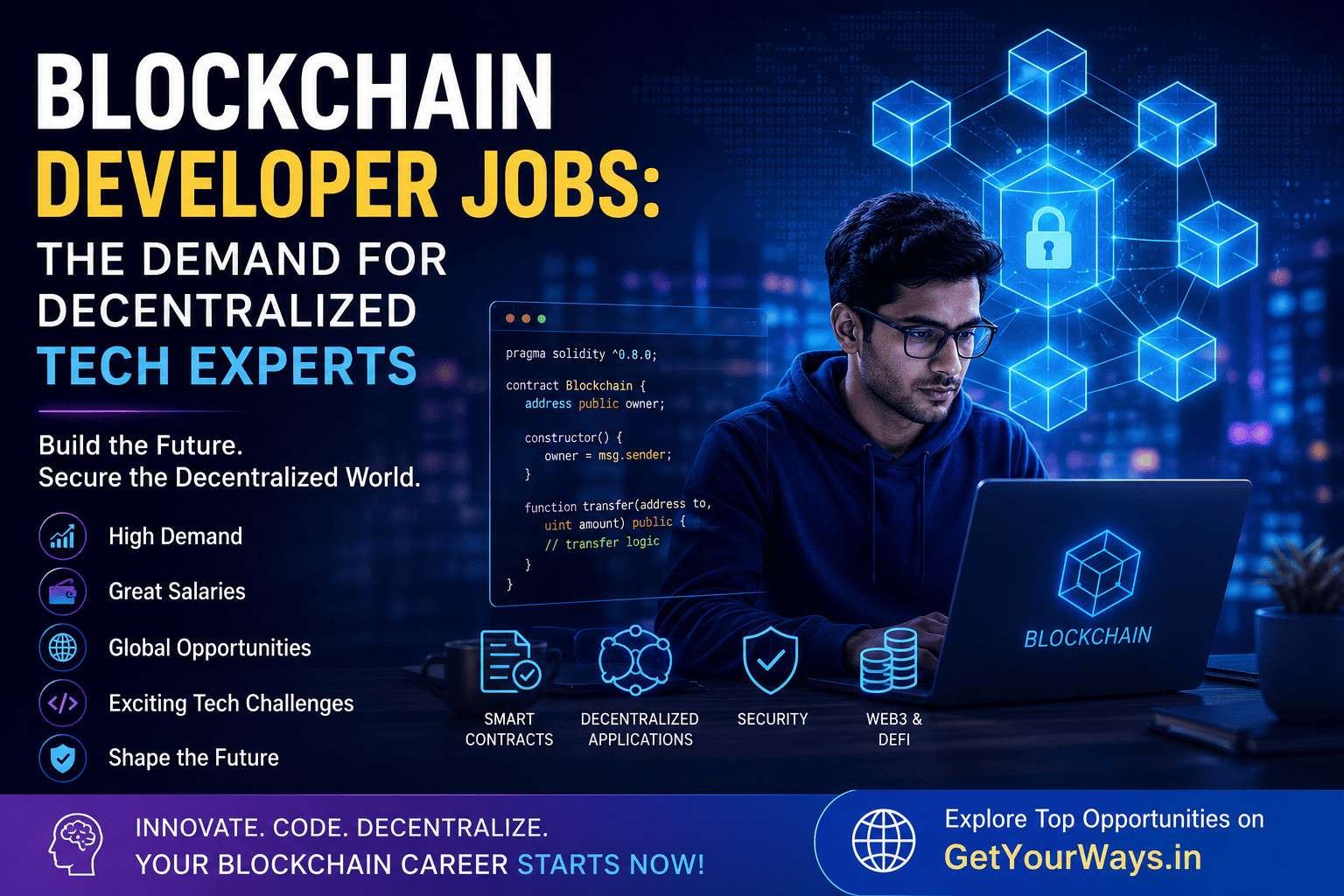
Blockchain Developer Jobs: The Demand for Decentralized Tech Experts
Blockchain technology has evolved far beyond cryptocurrency. Today, it powers secure financial transactions, digital identities, healthcare systems, supply chains, gaming platforms, government services, and enterprise applications across industries.
As organizations continue investing in decentralized technologies, Blockchain Developer Jobs have become one of the fastest-growing career opportunities in the global technology sector. Businesses are actively seeking professionals who can build secure, transparent, and scalable blockchain solutions.
Whether you’re a student, fresher, software engineer, or IT professional looking to switch careers, blockchain development offers excellent salaries, global opportunities, and exciting technical challenges.
In this comprehensive guide, you’ll learn everything about blockchain developer jobs, including required skills, salaries, career paths, industry demand, certifications, and future opportunities.
What is Blockchain?
Blockchain is a distributed digital ledger that records transactions securely across multiple computers. Instead of relying on a central authority, blockchain ensures transparency, immutability, and security through cryptographic techniques.
Every transaction is stored inside a “block,” and these blocks are connected together to form a chain.
Popular blockchain platforms include:
- Ethereum
- Hyperledger Fabric
- Solana
- Polygon
- Avalanche
- Binance Smart Chain
- Cardano
These platforms are being used by startups, enterprises, banks, governments, and Web3 companies worldwide.
What Does a Blockchain Developer Do?
A blockchain developer designs, develops, tests, and maintains decentralized applications (dApps), smart contracts, blockchain networks, and Web3 solutions.
Their responsibilities include:
- Building blockchain-based applications
- Developing smart contracts
- Creating decentralized finance (DeFi) applications
- Writing secure blockchain code
- Testing blockchain protocols
- Maintaining distributed networks
- Integrating blockchain APIs
- Improving transaction efficiency
- Ensuring blockchain security
Depending on the organization, developers may work on public blockchains, private enterprise blockchains, or hybrid solutions.
Why Blockchain Developer Jobs Are Growing
Several global trends are driving demand for blockchain professionals.
1. Enterprise Digital Transformation
Large enterprises are adopting blockchain for:
- Supply chain tracking
- Digital contracts
- Asset tokenization
- Secure document verification
- Identity management
Companies are investing heavily in blockchain infrastructure.
2. Growth of Web3
Web3 aims to create a decentralized internet where users control their data.
This has created opportunities in:
- Decentralized applications
- NFT marketplaces
- Decentralized Autonomous Organizations (DAOs)
- DeFi platforms
- Blockchain gaming
3. Increasing Investment
According to Statista, worldwide spending on blockchain solutions continues to grow steadily as organizations explore enterprise and consumer use cases across industries.
Reference:
https://www.statista.com/topics/5122/blockchain/
4. Financial Sector Adoption
Banks and financial institutions are using blockchain for:
- Cross-border payments
- Digital currencies
- Fraud prevention
- Trade finance
- KYC verification
Financial services remain one of the largest employers of blockchain developers.
5. Government Initiatives
Governments worldwide are exploring blockchain for:
- Land records
- Digital identity
- Public records
- Healthcare
- Tax systems
- Voting research
This creates long-term demand for skilled blockchain professionals.
Skills Required for Blockchain Developer Jobs
Success requires both programming knowledge and blockchain concepts.
Programming Languages
Common programming languages include:
- Solidity
- Rust
- Go
- JavaScript
- TypeScript
- Python
- Java
- C++
Blockchain Platforms
Developers should understand:
- Ethereum
- Hyperledger
- Solana
- Polygon
- Avalanche
- Binance Smart Chain
Smart Contracts
Essential skills include:
- Writing smart contracts
- Contract deployment
- Security testing
- Gas optimization
- Contract auditing
Web Development
Useful technologies include:
- React
- Node.js
- Next.js
- Express
- REST APIs
Databases
Knowledge of:
- MongoDB
- PostgreSQL
- MySQL
- IPFS
- Firebase
Version Control
Git and GitHub remain essential for collaborative blockchain development.
Security Concepts
Blockchain developers should understand:
- Cryptography
- Encryption
- Hashing
- Digital signatures
- Consensus algorithms
- Wallet security
Types of Blockchain Developer Jobs
Different organizations hire blockchain professionals for specialized roles.
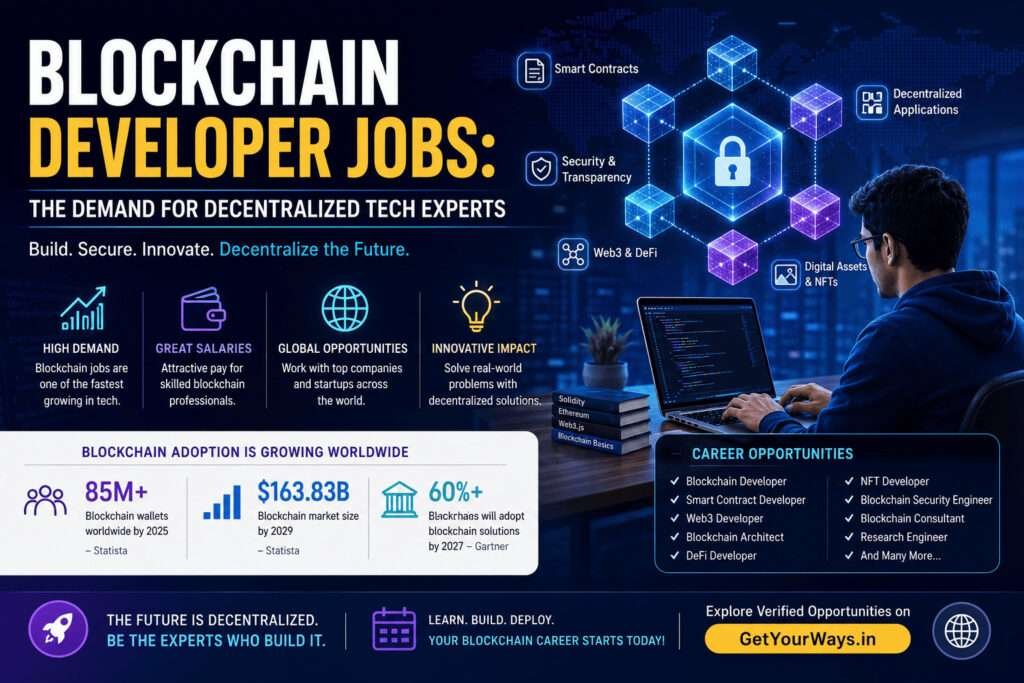
| Job Role Responsibilities Blockchain Developer Build blockchain applications Smart Contract Developer Develop secure smart contracts Web3 Developer Create decentralized web applications Blockchain Architect Design blockchain infrastructure Blockchain Security Engineer Secure blockchain networks Blockchain Consultant Guide enterprise blockchain adoption Blockchain Research Engineer Research blockchain protocols NFT Developer Build NFT marketplaces DeFi Developer Create decentralized finance products |
Industries Hiring Blockchain Developers
Blockchain is no longer limited to cryptocurrency.
Industries include:
- Banking
- FinTech
- Healthcare
- Insurance
- Logistics
- Manufacturing
- Government
- Retail
- Gaming
- Real Estate
- Education
- Agriculture
- Telecommunications
Blockchain Developer Salary
Salaries vary depending on experience, skills, and location.
| Experience | India (Approx.) | Global (Approx.) |
| Fresher | ₹5–10 LPA | $70,000–95,000 |
| 2–5 Years | ₹10–22 LPA | $95,000–140,000 |
| Senior | ₹22–45+ LPA | $140,000–220,000 |
Actual compensation varies by employer, specialization, and location.
Skills Employers Look For
Hiring managers typically evaluate candidates based on:
- Problem-solving
- Smart contract experience
- Blockchain architecture
- Coding ability
- GitHub portfolio
- Open-source contributions
- Communication skills
- Security awareness
- API integration
- Cloud deployment
Practical project experience often carries more weight than certifications alone.
Best Certifications
Popular certifications include:
- Certified Blockchain Developer
- Ethereum Developer Programs
- Hyperledger Training
- Blockchain Council Certifications
- IBM Blockchain Courses
- Linux Foundation Blockchain Programs
Always choose certifications that include practical projects.
How Freshers Can Start a Blockchain Career
Breaking into blockchain doesn’t require years of experience.
Step 1
Learn programming fundamentals.
Recommended:
- JavaScript
- Python
- Solidity
Step 2
Understand blockchain basics.
Study:
- Blocks
- Consensus
- Mining
- Wallets
- Nodes
- Tokens
Step 3
Build Projects
Examples:
- Voting system
- NFT marketplace
- Crypto wallet
- Token creation
- Supply chain tracker
Step 4
Upload Projects
Maintain:
- GitHub portfolio
- Documentation
- Demo videos
Step 5
Practice Coding
Improve:
- Data structures
- Algorithms
- Smart contract coding
- Security
Step 6
Apply for Jobs
Look for:
- Internships
- Graduate programs
- Junior blockchain roles
- Web3 startups
Common Interview Questions
Employers frequently ask:
- What is blockchain?
- Explain consensus algorithms.
- Difference between Proof of Work and Proof of Stake.
- What are smart contracts?
- Explain gas fees.
- What causes blockchain forks?
- What is Ethereum Virtual Machine?
- Difference between public and private blockchains.
- How do you secure smart contracts?
- Explain decentralized applications.
Practice answering with examples from your own projects.
Remote Opportunities
Blockchain development is among the most remote-friendly technology careers.
Many organizations hire globally for:
- Smart contract development
- DeFi engineering
- NFT platforms
- Enterprise blockchain
- Blockchain consulting
Strong English communication and a public portfolio improve your chances of securing remote roles.
Challenges in Blockchain Careers
Like every technology field, blockchain has challenges.
These include:
- Rapidly evolving technologies
- Security vulnerabilities
- Regulatory changes
- High learning curve
- Complex debugging
- Scalability issues
Continuous learning is essential.
Future of Blockchain Jobs
According to industry reports, blockchain adoption continues expanding across finance, logistics, healthcare, and digital identity solutions.
Emerging trends include:
- Central Bank Digital Currencies (CBDCs)
- Enterprise blockchain
- Web3 ecosystems
- Asset tokenization
- Decentralized identity
- AI and blockchain integration
- Supply chain transparency
- Green blockchain initiatives
Professionals who combine blockchain expertise with cloud computing, cybersecurity, artificial intelligence, or data engineering are expected to enjoy broader career opportunities.
Research & Industry Insights
Several respected organizations highlight the growing importance of blockchain and digital skills:
- World Economic Forum – Future of Jobs Report: Emerging technologies are reshaping labor markets and increasing demand for digital skills.
https://www.weforum.org/reports/the-future-of-jobs-report-2025 - Statista – Blockchain Market: Provides global market size, investment trends, and enterprise adoption statistics.
https://www.statista.com/topics/5122/blockchain/ - NASSCOM: Reports on India’s digital talent ecosystem, emerging technologies, and technology workforce.
https://nasscom.in - World Bank: Research on digital transformation, financial inclusion, and technology adoption.
https://www.worldbank.org
These resources can help students and professionals stay updated with industry developments.
Tips to Stand Out in Blockchain Job Applications
To increase your chances of landing a blockchain role:
- Build a strong GitHub portfolio with real projects.
- Participate in hackathons and coding competitions.
- Contribute to open-source blockchain repositories.
- Write technical blogs about blockchain concepts.
- Earn relevant certifications with hands-on labs.
- Stay updated with new blockchain protocols and standards.
- Network with developers through tech communities and conferences.
- Tailor your resume to highlight blockchain-specific skills and achievements.
Employers often value demonstrable skills and project experience over theoretical knowledge.
Final Thoughts
Blockchain is transforming industries by enabling secure, transparent, and decentralized systems. As organizations continue to invest in digital transformation and Web3 technologies, Blockchain Developer Jobs are expected to remain among the most promising technology careers.
Whether you’re a student exploring career options, a fresher entering the IT industry, or an experienced developer looking to specialize, now is an excellent time to build blockchain skills. Focus on mastering programming fundamentals, creating practical projects, understanding smart contracts, and continuously learning as the technology evolves.
A strong portfolio, hands-on experience, and consistent upskilling can open doors to exciting opportunities across startups, enterprises, and global remote teams.